
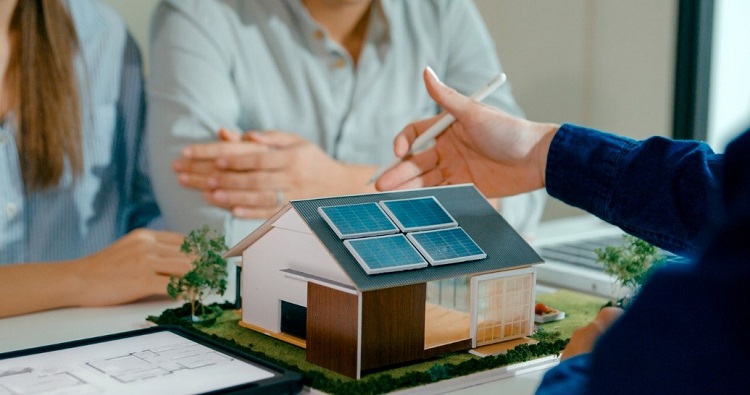
Real estate development today has become a lot more complex than it used to be. To begin with, there’s a mountain of red tape that goes into buying land and doing the necessary environmental impact studies.
Next comes the planning phase, an exercise in innovation as planners consider numerous options for creating a development that surpasses the sustainability of all previous projects.
Governments are under pressure to reduce carbon emissions, and in turn, manufacturers and developers are pressured to comply with ever-changing regulations. Besides this, buyers are more environmentally aware and are seeking options that promise an eco-friendly lifestyle that reduces their carbon footprint.
For these reasons, developers are forced to consider sustainable building methods and create housing and commercial estates that will contribute to the wellbeing of the environment.
This is where circular economy comes in. Circular economy embraces the use of recycled, reused and regenerated materials in the production and consumption processes. It extends the life cycle of products and reduces the harmful effects on the environment.
The planning phase
The planning phase is as important as the actual building of the development. Here’s why.
Environmental impact study
This involves a thorough investigation into the building site and its surroundings, its resources, and its inhabitants. The aim is to minimize the disruption of the people, fauna and flora endemic to the area and to preserve their habitats, particularly in the case of endangered species.
Careful planning helps to minimize land disruption and to identify areas that are more sensitive than others. Developers who have an interest in sustainability strive to leave nature untouched as far as possible.
Saving beautiful old trees on a property can add value, both from an aesthetic perspective and because they create a small biome of their own and give back to the environment. With some innovative planning, many of the native trees, grassland and shrubbery can be incorporated into the layout of the property. The aim is to destroy as little as possible during the building phase.
Residential and commercial properties include green spaces in their design, mainly to provide recreational areas for the residents. Park-like surroundings that accommodate native plants and natural water features will attract various birds and insects, turning it into a mini ecosystem that returns nutrients to the earth and purifies the air.
Sustainable materials and methods
Developers now have a wide choice of durable materials that have a minimal carbon footprint. These include materials that are less harmful to the atmosphere during the manufacturing phase, less invasive in terms of sourcing the raw materials, and biodegradable in the long term.
Not everyone wants to live in a cob house, but the materials mentioned below look good and reduce the need for insulation, air conditioning and heating:
- Bamboo is fast growing, biodegradable and durable, and it requires little water to cultivate. It also absorbs large amounts of carbon dioxide, making it a good option for combatting climate change.
- Cork bark is a biodegradable material and can be harvested repeatedly as the trees regenerate their bark reasonably quickly.
- Hempcrete consists of the woody core of the hemp plant, mixed with a lime-based binder and water. Used as insulation or as an alternative to concrete in the form of bricks, hempcrete absorbs carbon from the atmosphere and regulates indoor temperatures.
- Reclaimed wood, recycled steel and bricks made from building rubble are often used in new buildings, providing artistic touches that are aesthetically pleasing.
- Compressed recycled plastics are durable and used to create bricks, roofing tiles, decking, insulation, partition walls and waterproofing.
Many budding entrepreneurs are finding innovative ways to recycle plastic and other waste materials, creating sustainable products and providing job opportunities for local community members.
Waste and pollution management
Rainwater tanks and recycling bins can be installed during the building process and left behind for residents to use. Builders should be separating their rubble into separate bins for wood offcuts, masonry rubble, piping, wiring material, organic matter and electronic waste.
Dust collectors can be utilized to reduce the amount of dust produced during building, and water runoff should be channeled and reused where possible.
Noise pollution should be monitored and controlled where possible. In the long term, solid fences will reduce the sound of traffic or noisy neighbors. Fences provide security and can be constructed from some of the sustainable materials mentioned above.
Staying off-grid wherever possible
Planners also consider various methods of channeling greywater, directing it to treatment plants for purification so that it can be used to flush toilets or irrigate gardens.
An important part of the development is the installation of renewable energy options, such as solar or wind power. Maputo businessman Rofino Licuco has taken his property development expertise one step further by investing in a renewable energy project that, together with his real estate business, provides a holistic, sustainable solution for the wellbeing of future residents.
A greener future awaits
As the need for climate change interventions increases, it’s important for developers to keep in touch with the latest accomplishments in terms of eco-friendly building materials, methods and design trends.